The History of Oak Forest: From 1940s Fields to Family Suburb
Just northwest of the Loop, Oak Forest looks like it has always been a leafy, established Houston neighborhood. In reality, the whole community dates to a single bold move in the 1940s: one developer, about 1,100 acres of former farmland, and a postwar building wave that turned ranch houses into a way of life. Here is the story of how Oak Forest came to be, and why those postwar roots still define the neighborhood today.
From Farmland to a Modern Suburb
Oak Forest was one of Houston's first and largest post-World War II residential developments. The land that became the neighborhood was annexed by the city in the 1940s, and in 1946 developer Frank W. Sharp assembled around 1,100 acres northwest of downtown with a clear plan: build a complete suburb for the families flooding into Houston after the war.
Sharp's Oak Forest Realty Corporation platted roughly 4,780 lots by 1947, and the first model home, which cleverly doubled as the sales office, went up at the corner of Golf Drive and Fisher Drive. Almost all of the earliest buyers were returning World War II veterans, who purchased those first homes for about $8,000 to $10,000. The neighborhood grew so fast, and into such a rural area, that residents did not even have telephone service until 1948.
A Showcase of Postwar American Design
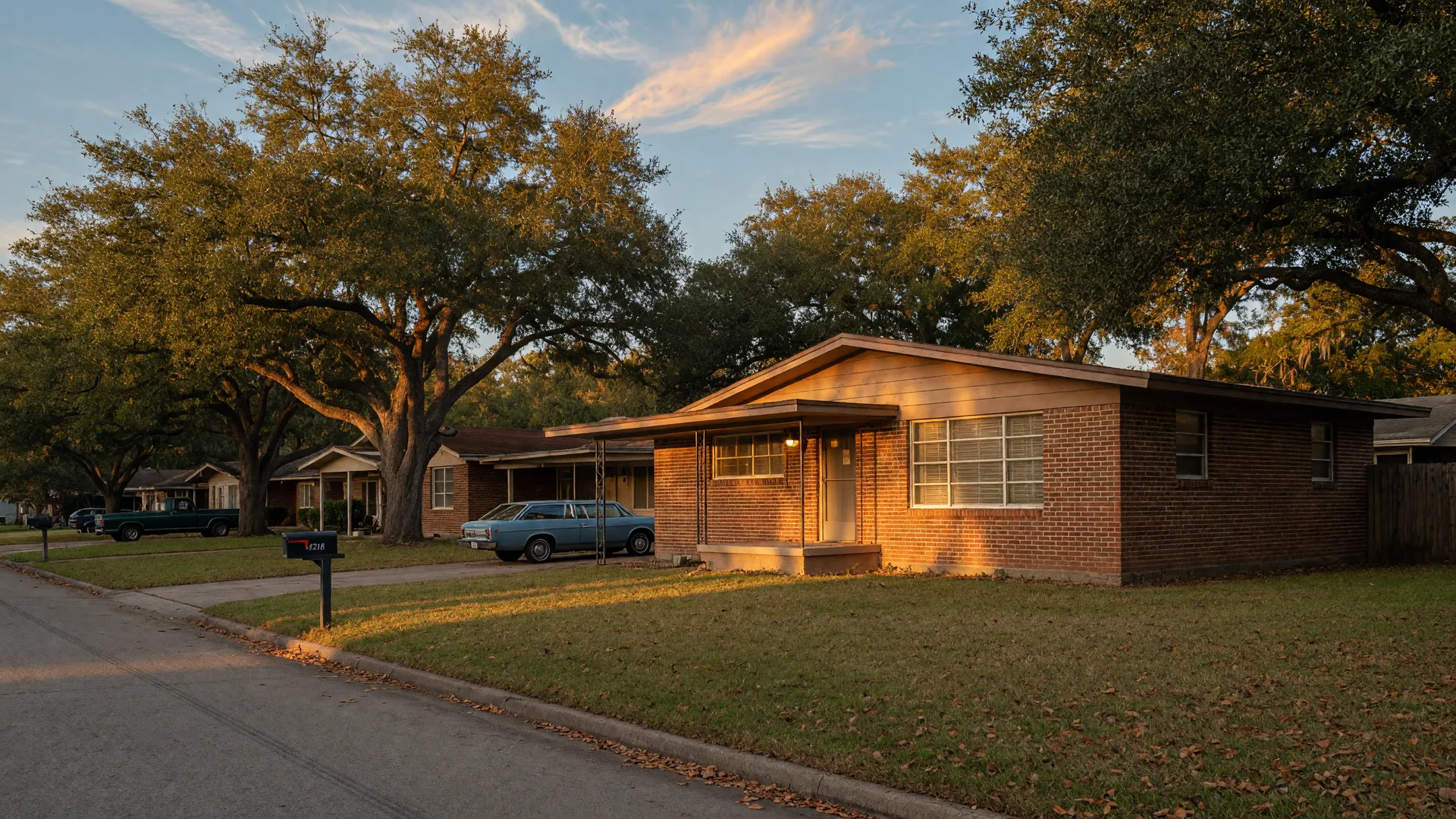
Oak Forest is, in effect, a living catalog of mid-century American housing. The neighborhood's first homes were postwar ranches and mid-century modern styles set on generously sized lots among mature oak and pine trees, the kind of architecture that a generation grew up pointing out as "the modern house." Because the homes went up quickly but with real care for landscaping and streetscape, the neighborhood reads today as quietly cohesive: brick ranches, low rooflines, carports, and canopies of trees.
That architectural legacy is one of Oak Forest's defining traits. A walk down almost any block is a crash course in postwar design, and over the years Oak Forest has become a draw for buyers who appreciate classic mid-century details and a mature, established feel just beyond the city.
Planning for Community: Parks and a Bayou Greenway
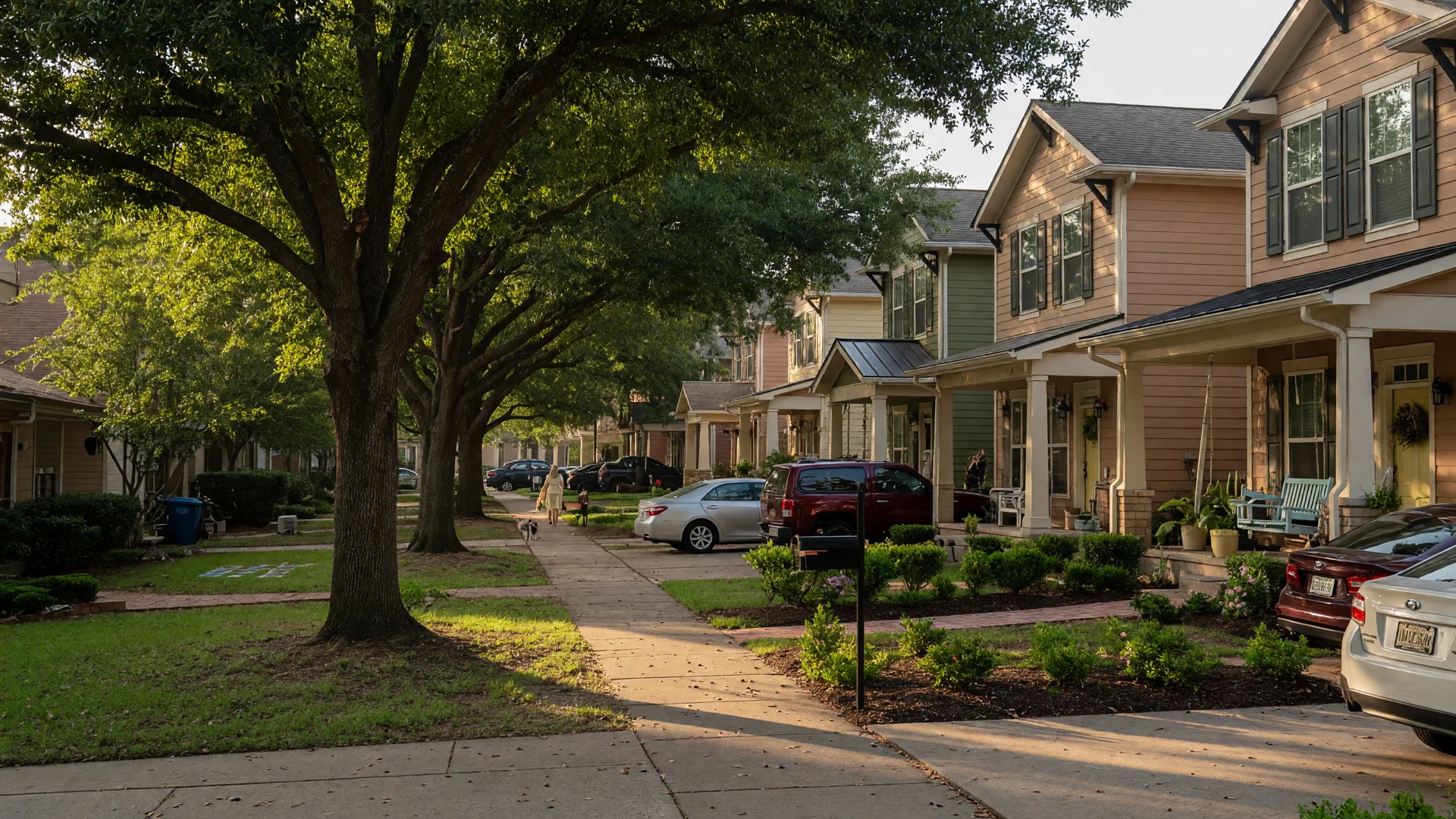
What set Oak Forest apart from many hurried postwar subdivisions was deliberate planning. The original plat set aside parcels for parks and community space, and the natural contour of White Oak Bayou, which runs through the area, was threaded into the plan as a green corridor. That foresight pays off every day: parks, playgrounds, and the bayou trails make Oak Forest one of the more family-friendly and bikeable spots in this part of the city.
Local businesses along 43rd Street, also part of Sharp's plan, have survived for decades and remain the neighborhood's everyday strip of shops, restaurants, and services. It is one of those streets where a simple errand can turn into a run-in with three neighbors.
A Neighborhood That Protects Its Character
Longtime residents will tell you that the Oak Forest Homeowners Association is one of the most organized in the area. The association upholds deed restrictions, runs an active patrol program through the neighborhood, and keeps a close eye on what gets built, which has helped the neighborhood balance steady growth with its original character. By some counts the neighborhood is one of the three largest subdivisions in Harris County, so when anything changes here, it changes at residential scale.
Oak Forest also sits at the center of an enviable cluster of like-minded neighbors. Garden Oaks, with its own deeper history, lies right beside it; Timbergrove and Lazybrook sit close by; and the shops and restaurants of the Heights are just a few minutes down the road. For many locals, that is the balance they wanted: postwar space and ease with quick access to the Inner Loop hustle.
Why Oak Forest Endures
Oak Forest's appeal is not a single landmark or festival; it is the accumulated calm of decades. Big trees, ranch roofs, bayou views, a main drag lined with small businesses, and a civic association that cares. The homes have been restored and reinvented, the oaks have only grown, and the neighborhood continues to do what it was designed to do in 1947: give Houston families a leafy, livable place to put down roots.
Oak Forest at a Glance
For neighbors who call Oak Forest home, the name says it all: woodsy, grounded, and permanent. It is a postwar suburb that grew into a genuine community, and after nearly eight decades it still offers one of the best combinations of space, shade, and Inner Loop convenience in Houston.

Shawn Manderscheid
Fourth-generation Houston Heights native. The Shawn Manderscheid Team curates this guide and has been helping families find their place in and around the Heights for more than 25 years.