Classic Charm: A Guide to the Historic Architecture of Garden Oaks, Oak Forest & Timbergrove
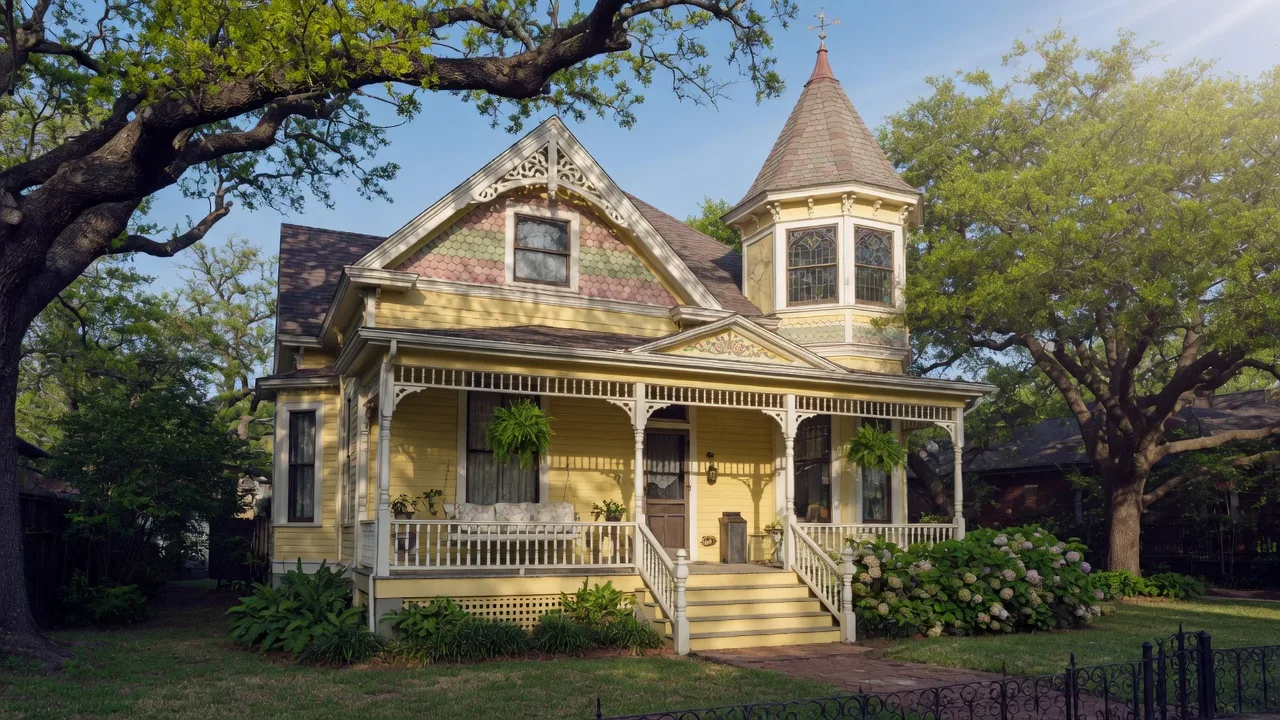
When most people think of historic Houston neighborhoods, the Victorian and Craftsman bungalows of the Heights come to mind first. But just beyond the Heights, three neighborhoods tell a different architectural story. Garden Oaks, Oak Forest, and Timbergrove were developed later, primarily from the late 1930s through the 1960s, and they showcase the mid-century residential styles that defined a generation of American suburban life. For homebuyers and architecture enthusiasts alike, these neighborhoods offer a rich and varied housing stock that is distinctly different from the Heights proper.
Garden Oaks: From Wooded Wonderland to Post-War Gem
Garden Oaks was originally marketed in the 1930s as "Houston's Wooded Wonderland," a planned community of country estates on generous lots beneath a canopy of mature trees. The neighborhood was developed in phases, and its architecture reflects the evolving tastes of the mid-20th century.
Bungalows and Plantation-Style Homes
Some of the earliest homes in Garden Oaks are charming bungalows, built in the 1930s and 1940s. These single-story structures feature broad front porches, low-pitched roofs, and simple but graceful detailing. Alongside them, you will find plantation-style homes with their characteristic symmetrical facades, central front doors, and shuttered windows, a style that evokes the Gulf South architectural tradition.
Classic Ranch Homes
As the neighborhood expanded into the 1950s, the ranch home became the dominant style. Garden Oaks ranches are typically single-story, with horizontal silhouettes, attached garages, and open floor plans that reflected the casual, car-oriented lifestyle of post-war America. Many of these homes sit on lots of a quarter-acre or more, providing space for gardens, play areas, and the towering oak trees that give the neighborhood its name.
Picturesque Cottages and Split-Levels
Garden Oaks is not limited to one style. Scattered throughout the neighborhood are picturesque cottages with storybook details, split-level homes that maximize living space on modest footprints, and newer infill construction that ranges from tasteful modern farmhouses to bold contemporary designs. The Plazas subdivision, the last of three major phases, includes some original 1960s homes alongside more recent townhome developments.
"Garden Oaks was originally marketed as 'Houston's Wooded Wonderland' in the 1930s, and the towering oaks and generous lots still define the neighborhood's character today."
Oak Forest: Mid-Century Living Under the Canopy
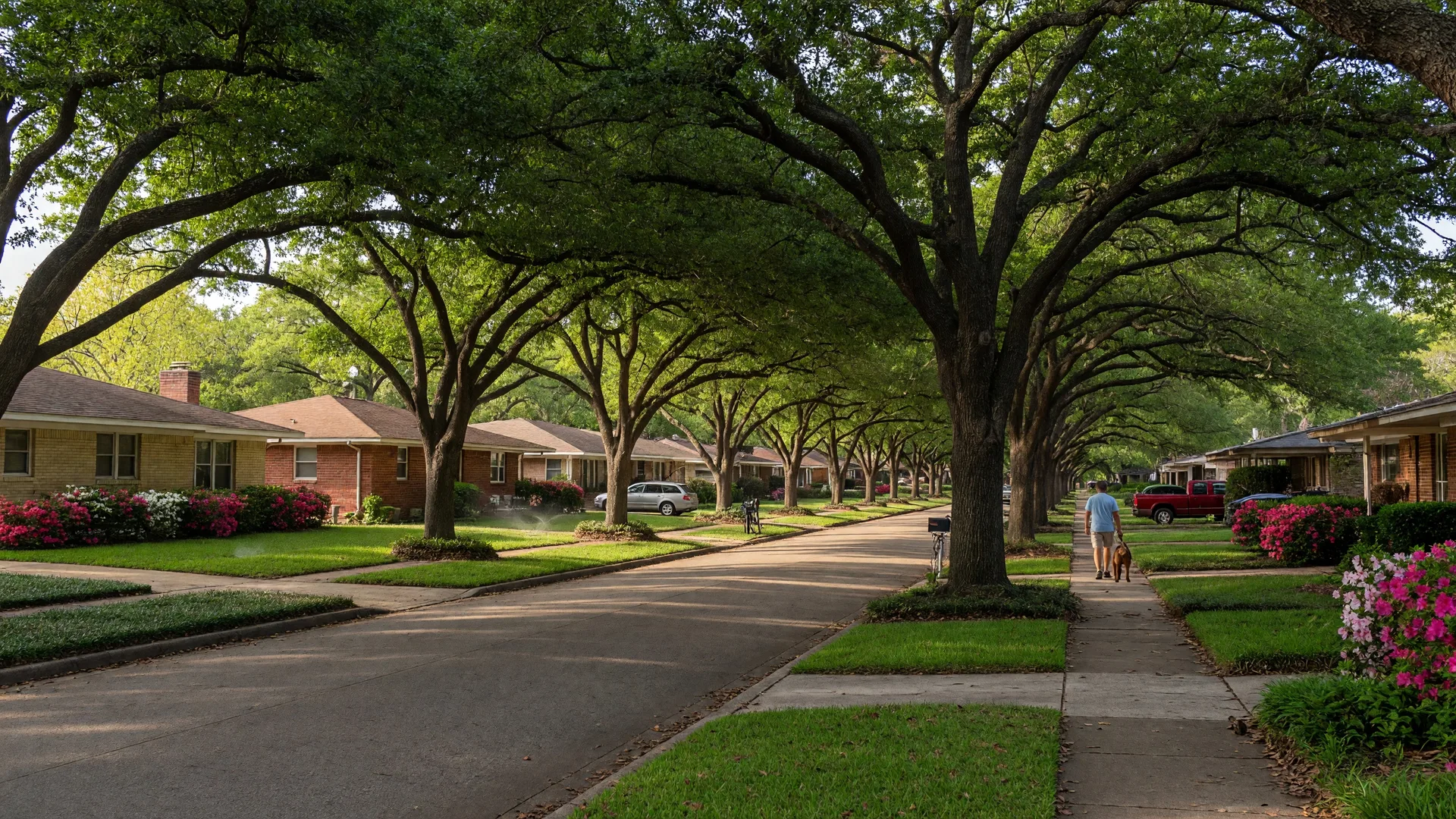
Oak Forest, developed from the 1940s through the 1960s, is one of Houston's most established Inner Loop neighborhoods. Its name comes from the dense canopy of mature live oaks that shades the winding streets, creating a leafy, suburban feel that is remarkable for a neighborhood inside the 610 Loop.
Post-War Bungalows
The earliest homes in Oak Forest are post-war bungalows, built in the late 1940s and early 1950s. These homes are smaller and more modest than their counterparts in Garden Oaks, reflecting the housing demands of returning veterans and young families. But what they lack in square footage, they make up for in character. Many feature original hardwood floors, built-in cabinetry, and brick fireplaces that preserve the mid-century aesthetic.
The Ranch Revolution
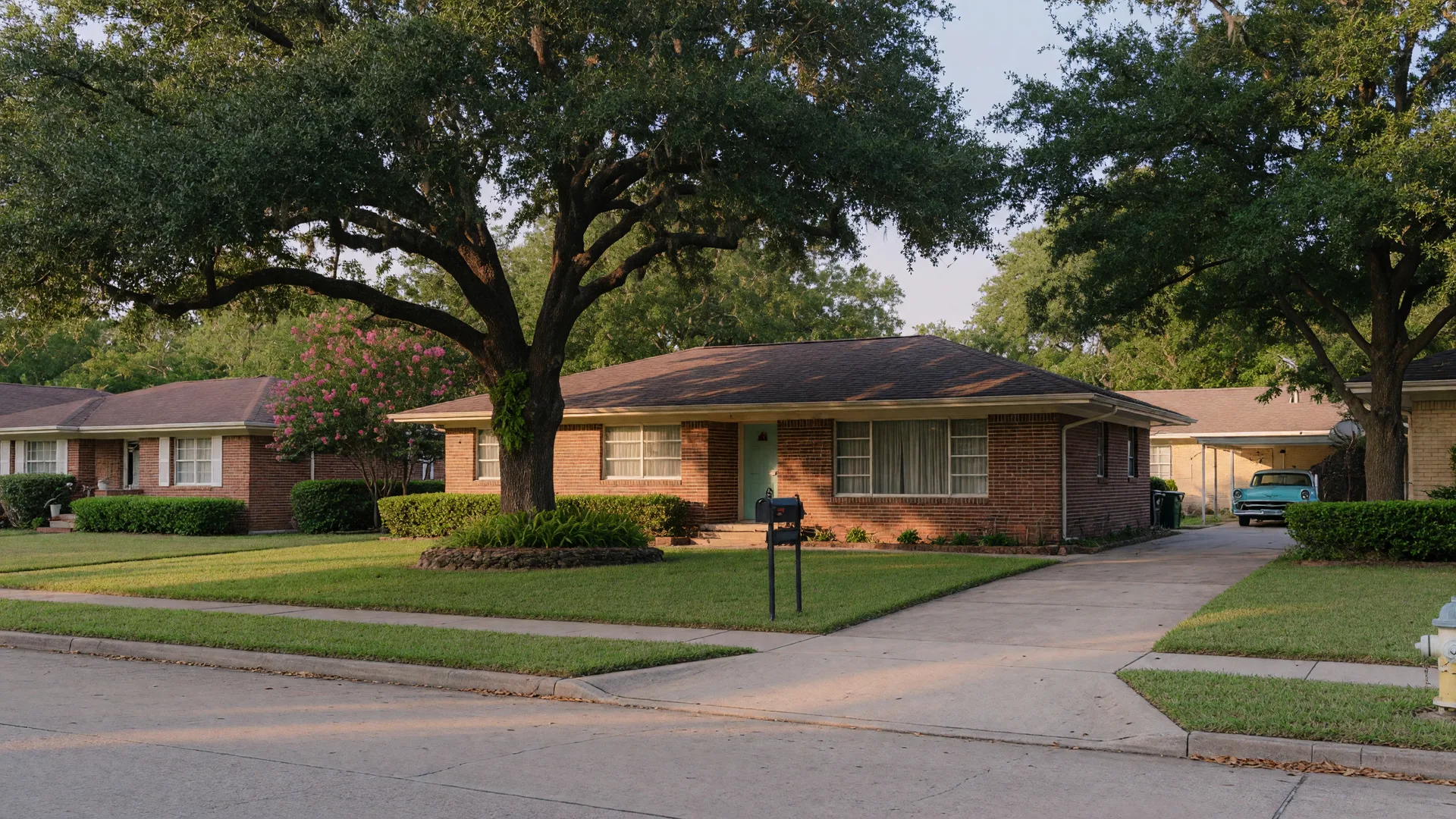
As the neighborhood matured, ranch homes became the standard. Oak Forest ranches are typically brick or a mix of brick and siding, with low-pitched roofs, wide eaves, and large picture windows that bring natural light into the open living areas. The ranch style was perfectly suited to Houston's climate, with its emphasis on single-story living, cross-ventilation, and easy access to outdoor spaces.
New Construction and Renovations
In recent years, Oak Forest has experienced a surge of renovation and new construction. Many of the original ranch homes have been thoughtfully updated, with expanded floor plans, modern kitchens, and primary suite additions that respect the original character while adding contemporary comfort. At the same time, teardowns have made way for new homes that range from faithful reinterpretations of the ranch style to bold, modern designs. The result is a neighborhood in transition, where original mid-century homes sit alongside brand-new construction on the same block.
Timbergrove and Lazybrook: Mid-Century Ranch Country
Timbergrove and its neighbor Lazybrook represent one of the most architecturally cohesive neighborhoods in the Inner Loop. Developed primarily in the 1950s and 1960s, the area is characterized by its distinctive mid-century ranch homes, many of which remain remarkably intact.
The Ranch Home Tradition
If you drive through Timbergrove and Lazybrook, you will notice a recurring theme: the single-story, four-sides brick ranch home. These homes were built on concrete slab foundations, a practical choice for Houston's clay soils, and they feature the hallmarks of mid-century ranch design: low-pitched or hipped roofs, attached carports or garages, and floor plans organized around a central living area. The brick exteriors, often in warm earth tones, give the neighborhood a cohesive, grounded feel.
Mature Landscapes and Towering Pines
What sets Timbergrove apart from other mid-century neighborhoods is its landscape. The area was named for its timbered, wooded character, and the towering pines and mature hardwoods that shade the streets create a sense of seclusion that is rare inside the Loop. Many homes are set back from the street on generous lots, with front yards filled with azaleas, camellias, and established shade trees.
Preservation and Change
While many of the original ranch homes in Timbergrove have been lovingly preserved and renovated, the neighborhood is also seeing new construction. Contemporary modern homes and townhomes are beginning to appear alongside the traditional housing stock, adding architectural diversity to a neighborhood that was once almost uniformly mid-century. The challenge for the community is to welcome new development while preserving the character that makes Timbergrove special.
Architecture at a Glance
- Garden Oaks: Bungalows, plantation-style, ranch homes, split-levels
- Oak Forest: Post-war bungalows, brick ranches, new construction
- Timbergrove: Four-sides brick ranches, mid-century modern
- Era: 1930s (Garden Oaks) through 1960s (Timbergrove)
- Common Features: Brick exteriors, single-story, mature trees
What This Means for Homebuyers
For homebuyers looking inside the Loop, Garden Oaks, Oak Forest, and Timbergrove offer something that the Heights cannot: the opportunity to own a classic mid-century home on a generous lot, often at a more accessible price point than the historic Victorians and Craftsman bungalows of the Heights proper. The homes are solidly built, the lots are spacious, and the neighborhoods have a relaxed, family-friendly character that appeals to a wide range of buyers.
At the same time, the wave of renovation and new construction means that buyers have options. You can find an original ranch home that needs some love and a vision, or you can buy a fully renovated home with modern finishes and systems. You can also find new construction homes that bring a contemporary aesthetic to these established neighborhoods.
The key is understanding what you are looking at. A classic 1950s ranch in Timbergrove is not the same as a 1920s Craftsman in the Heights, but it has its own virtues: generous square footage, solid construction, a floor plan designed for modern family life, and a yard that gives you room to breathe. For the right buyer, that combination is exactly right.
A Living Architectural Legacy
The architecture of Garden Oaks, Oak Forest, and Timbergrove tells a story about Houston's evolution. These neighborhoods were built during a period of optimism and growth, when the American dream of a home with a yard felt attainable for a broad swath of the population. The homes reflect that optimism in their open floor plans, their connection to the outdoors, and their emphasis on comfortable, casual living.
Today, as these neighborhoods enter their seventh, eighth, and ninth decades, they are experiencing a new chapter. Renovations and new construction are adding contemporary energy to the classic mid-century fabric. The challenge and the opportunity for these communities is to evolve without losing what makes them special. If the care that residents take in their homes and their neighborhoods is any indication, the architectural legacy of Garden Oaks, Oak Forest, and Timbergrove is in good hands.

Shawn Manderscheid
Fourth-generation Houston Heights native and leader of the Shawn Manderscheid Team. Curated by a team with over 25 years of local knowledge and community connections.