The History of Rice Military: From Camp Logan to Inner Loop Living
Rice Military is the story of how a World War I army camp became Houston's beloved Memorial Park, and how the land around it grew into one of the Inner Loop's most walkable neighborhoods. The neighborhood's name carries both sides of that history: "Rice" for the family that owned much of the land, "Military" for the camp that trained tens of thousands of soldiers. Here is how it all came to be.
Camp Logan: Houston's World War I Training Ground
When the United States entered World War I in 1917, the Army hurried to build training camps across the country. Camp Logan, established that year, was one of sixteen auxiliary camps and sprawled over hundreds of acres on the west side of Houston, south of Washington Avenue and across what is now Memorial Park and the Houston Arboretum. At its peak the camp quartered more than 30,000 troops, mostly National Guard soldiers and officers training before deployment. The name honored John A. Logan, the Union general who served in the Mexican-American War and the Civil War.
The 1917 Incident That Shook the City
Camp Logan is also the site of one of the most painful chapters in Houston history. On the night of August 23, 1917, 156 soldiers of the all-Black 3rd Battalion, 24th Infantry Regiment, who were guarding construction at the camp, mutinied after a Black soldier was beaten and arrested by Houston police. The uprising left more than twenty people dead, and it produced the largest number of courts-martial and executions in United States military history, with 19 soldiers executed in the aftermath.
For decades the event, long downplayed in official histories, was remembered quietly and often unjustly. More recently it has been recognized as a turning point in the struggle for civil rights and fair treatment of Black soldiers, and it is acknowledged as a genuine, painful piece of the neighborhood's ground. History is rarely tidy, and Camp Logan's is a reminder that the ground beneath Memorial Park's running trails has stories Houston is still learning to tell well and fully.
From Camp to Park: The Hogg Family's Gift
After the war the camp was decommissioned and the land fell into neglect. In 1923, brothers Mike and Will Hogg, sons of former Texas governor Jim Hogg, bought 875 acres of the former camp from the estate of William Marsh Rice and donated the land to the City of Houston to create Memorial Park. The gift was meant, in the brothers' words, to honor those who served and to preserve a green lung for a growing city. It remains one of the most consequential acts of philanthropy in Houston's history: today Memorial Park covers roughly 1,500 acres of trails, woods, and the Seymour Lieberman Loop, minutes from downtown.
How the Neighborhood Got Its Name
The neighborhood that grew up beside the park took its name from those two threads. The Rice family, whose estate also founded Rice Institute (now Rice University), owned much of the land in the late 19th and early 20th centuries. The "Military" honors Camp Logan, whose parade ground once stood where neighborhoods and restaurants now sit. Put them together and you get a square mile of Houston whose very name is a history lesson.
Bungalows, Shotgun Houses & the Building Boom
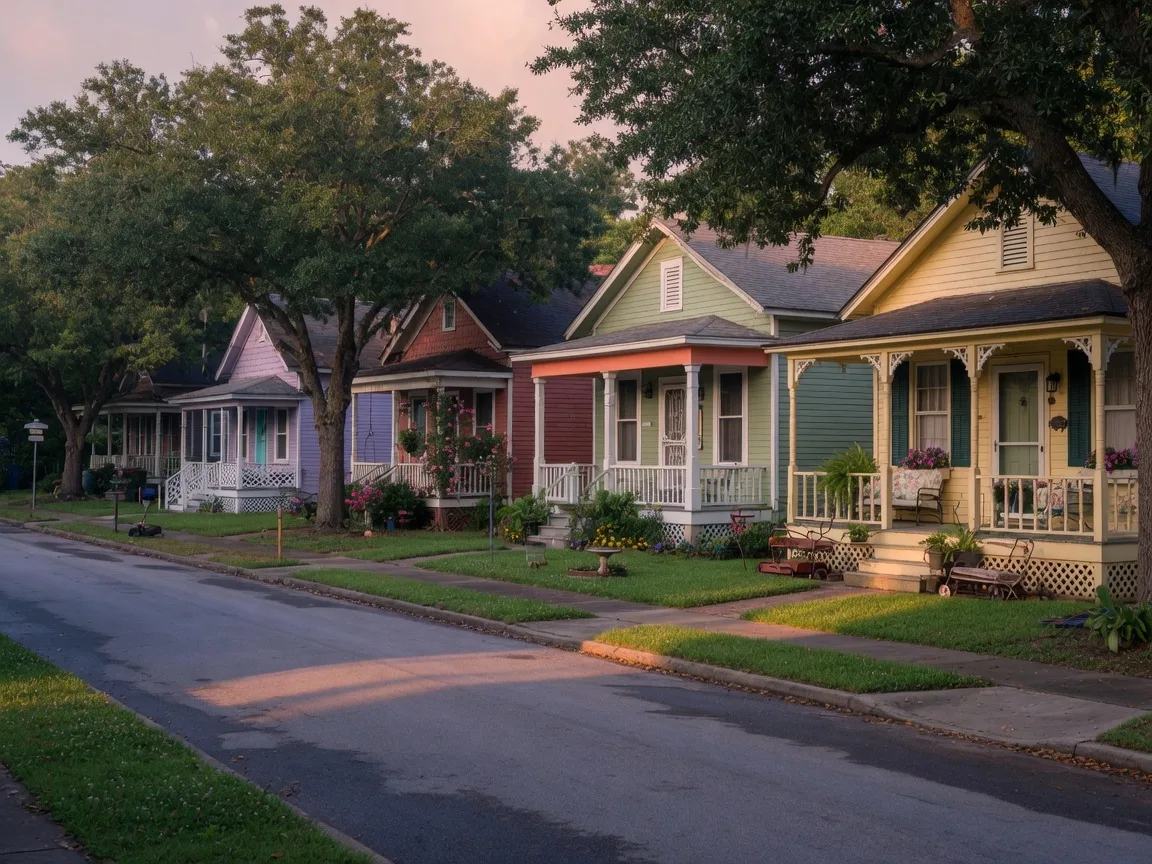
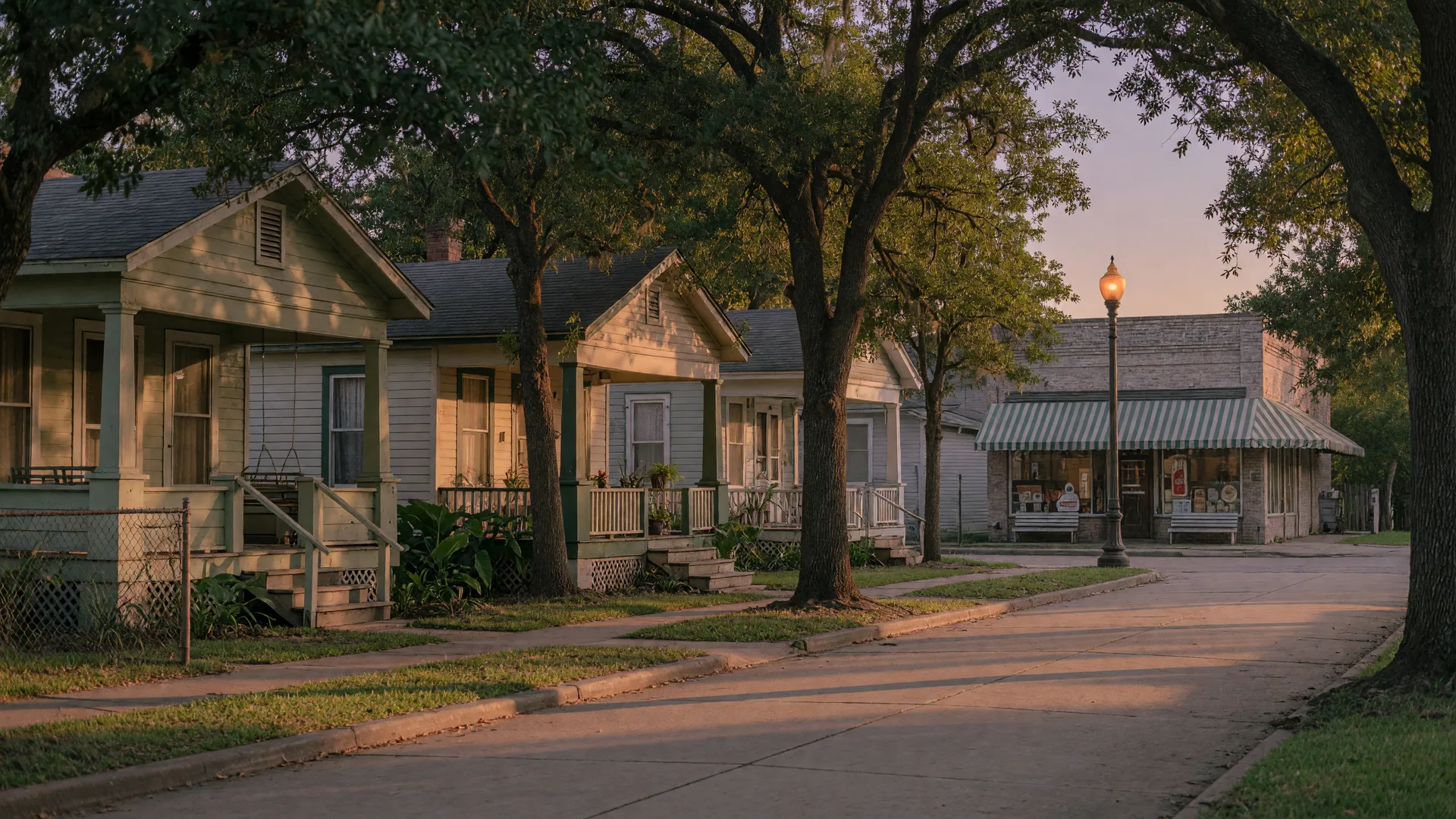
Development came slowly at first. Through the 1920s, 1930s, and 1940s, builders put up modest bungalows, shotgun houses, and small craftsman cottages on the quiet streets between Washington Avenue and Buffalo Bayou, many of them home to working families who valued the short streetcar ride downtown. A handful of that original stock survives, most visibly around Blossom Street, where eight houses built between 1905 and 1915 were designated the Brunner-Harmonium Historic District in 2022, a rare cluster that predates the camp era neighborhood entirely.
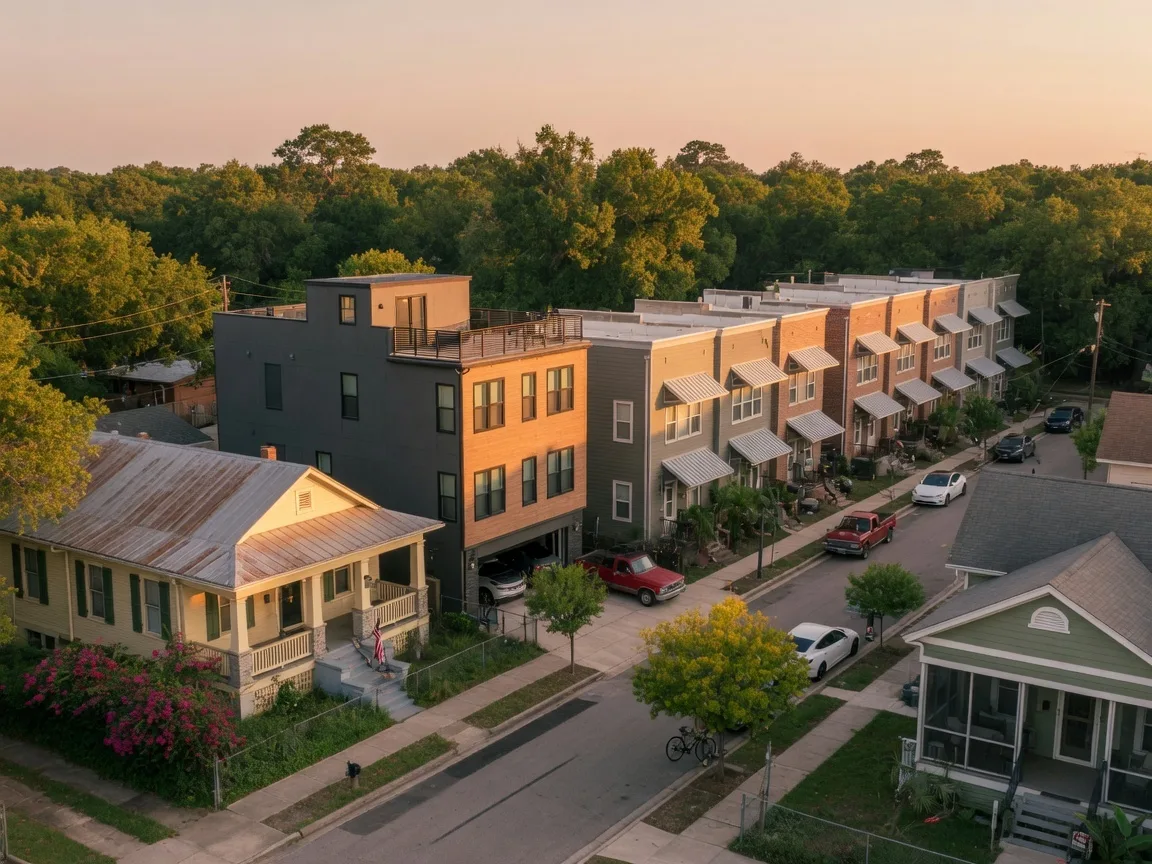
The rest of the story is boom. Beginning in the early 2000s, the Washington Avenue corridor redeveloped rapidly, and block after block of original bungalows gave way to townhomes, mid-rise apartments, restaurants, and nightlife. Prices climbed, the beer gardens arrived, and Rice Military became one of Houston's most sought-after Inner Loop addresses. The change has been dramatic, but the bones of the old neighborhood, the grid, the quiet side streets, the mature oaks, are still there if you know where to look.
Where Rice Military Actually Sits
Boundaries in Houston are always a little loose, but Rice Military is generally described as the area bounded by Washington Avenue to the north, Memorial Drive and Buffalo Bayou to the south, Shepherd Drive to the east, and Westcott Street to the west. Some guides stretch the eastern edge to Waugh Drive and Studemont to include the broader Washington Corridor. Either way, the walkable heart of the neighborhood runs from the Beer Can House at 222 Malone Street down to the bayou trails that connect to Memorial Park and downtown.
Rice Military Today
Today Rice Military is where a lot of Houston goes to play: Washington Avenue's bars and restaurants, Memorial Park's trails and Eastern Glades, the Beer Can House's clinking folk-art facade, and some of the best skyline views inside the Loop. For cyclists, the neighborhood sits right on the MKT and Buffalo Bayou trail network, which connects directly to the hike-and-bike network of the Heights. It is a neighborhood that wears its history lightly, but the story of the camp, the riot, the brothers' gift, and the bungalow builders is worth knowing every time you run a loop of Memorial Park.
Rice Military at a Glance
- Founded: Camp Logan established 1917; neighborhood homes mostly 1920s–1940s
- Name: "Rice" from the Rice estate; "Military" from Camp Logan
- Big day: August 23, 1917, the Camp Logan uprising
- The gift: 1923, Hogg brothers donated 875 acres for Memorial Park
- Borders: Washington Ave / Memorial Dr / Shepherd Dr / Westcott St
- Historic gem: Brunner-Harmonium Historic District, eight homes from 1905–1915 near Blossom St
- Landmark: Beer Can House, 222 Malone St
Rice Military proves that a neighborhood's best asset can be its memory. The camp is gone, the bungalows are mostly townhomes, and the park the Hoggs gave us is bigger and better than ever, but the names on the street signs still tell the old story. Next time you park near Washington Avenue for tacos or trail run at Memorial Park, you will know exactly whose ground you are standing on.

Shawn Manderscheid
Fourth-generation Houston Heights native. Over 25 years of local knowledge and community connections.