The MKT Railroad & Heights Central Station: How the Iron Horse Shaped the Heights
Almost every Heights resident has walked, biked, or run the MKT Trail, the paved green corridor that slices diagonally through the neighborhood. What fewer of us remember is that the trail sits on ground that once carried a real railroad, the Missouri-Kansas-Texas line, better known as the Katy, and that a freight yard once sat right in the middle of this quiet bungalow neighborhood. Here is the story of the railroad that helped shape the Heights' east side, the trail that rose from its rails, and the Heights Central Station hub that now borrows its name.
The Katy Comes to Town
The Missouri-Kansas-Texas Railroad was the first railroad to enter Texas from the north, laying claim to the nickname by which Houstonians still know it, the Katy. When its main line finally reached Houston in April 1893, it arrived at a city that was booming, and it connected the Gulf port to markets across the plains.
The timing mattered to the Heights in a very personal way. The neighborhood was founded in 1891 by the Omaha and South Texas Land Company under the planning of Daniel Denton Cooley, a developer who marketed it as a suburban escape from downtown's noise and crowds. The iron horse complicated that promise. The brand-new community had been laid out right on top of the Katy's route, and soon enough the downtown-bound trains were rattling through alongside the tidy new streets.
A Railroad in the Middle of the Neighborhood
The Katy's Houston freight yard, known as Eureka Yard, sat in the middle of the Heights, with track crossing Heights Boulevard and paralleling what is now 7th Street as it headed toward downtown. For roughly a century, grain, lumber, produce, and coal moved through the heart of the neighborhood, and that industrial heartbeat shaped the land uses, the commerce, and even the planning of the east side of the Heights.
Residents and railroads rarely get along quietly forever, and over the decades the relationship in the Heights shifted. As trucking replaced rail for most local freight and the passenger era faded, the Katy's yard became less essential, and the expanse of track through a growing residential district felt more and more out of place. By the late twentieth century the writing was on the wall: the line was destined to carry commuters, flowers, and strollers rather than boxcars.
From Rails to Trails
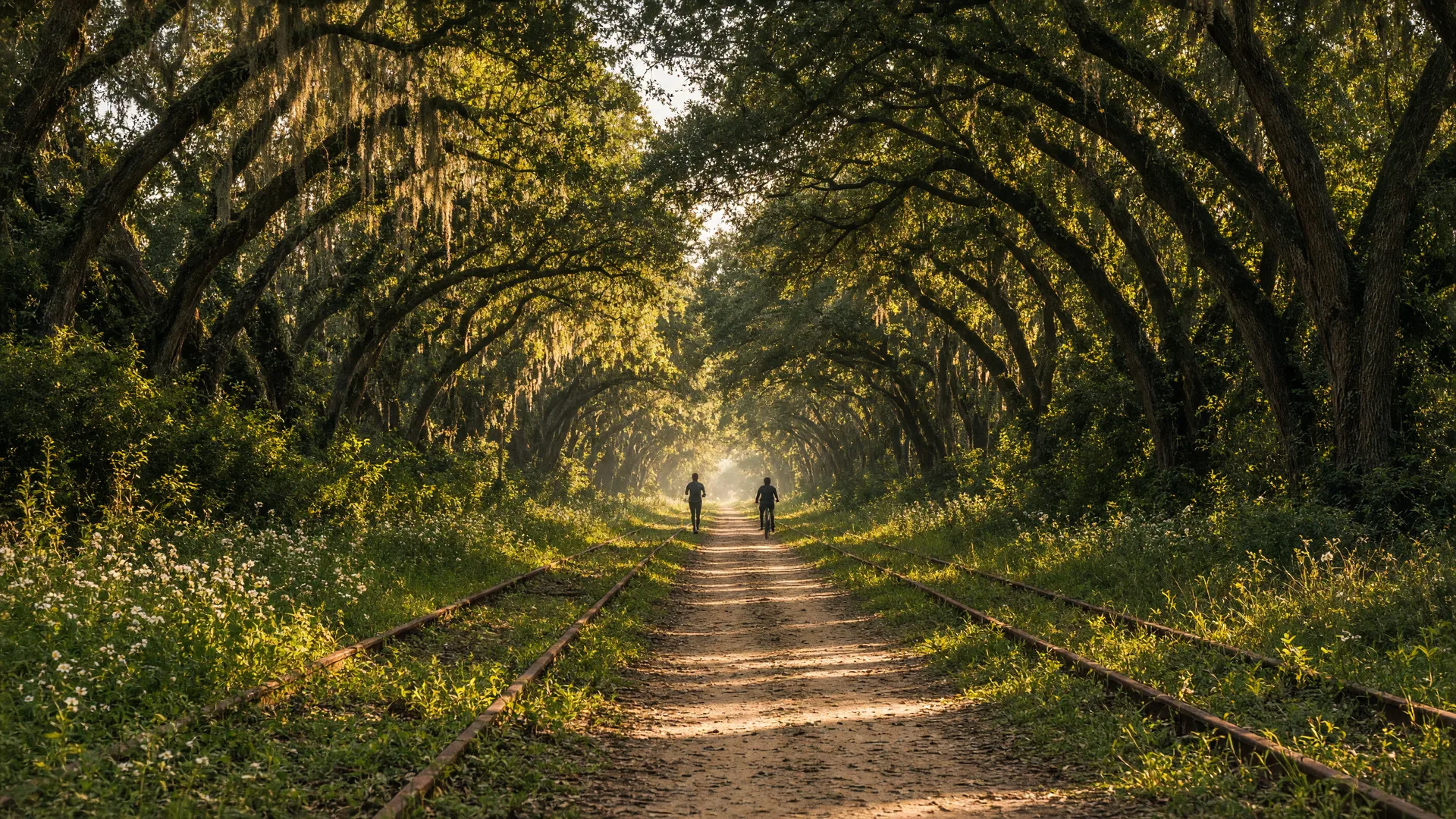
When the track came out, the right-of-way became the MKT Trail, named for the railroad that once ran there. Today it is one of the Heights' favorite arteries, a smooth, shaded path that connects the neighborhood to the white bridge over Studewood, to the bayou greenways, and on toward downtown. The old rail crossing at Heights Boulevard and the low corridor near 7th Street are quiet reminders of the trains that once ran behind the bungalows.
That conversion is a classic Heights lesson: the same land that once separated the neighborhood by a freight line now ties it together. Walk the MKT on a weekend morning and you will pass runners, dog walkers, kids on bikes, and neighbors heading to the farmers market, all streaming along what is effectively the neighborhood's original spine.
Heights Central Station: A New Hub With a Railroad Name
A gentle clarification, though, for newcomers: the mixed-use development called Heights Central Station at 1031 Heights Boulevard is not a historic rail depot. The low-rise retail and office complex, built on the block bounded by Heights Boulevard, Yale Street, and West 11th Street, sits on the site of a former United States Postal Service building, a Heights post office since the 1970s. Development began in 2016, with the architecture designed with the city's historic commission in mind to fit the neighborhood's character.
The name is a nod, and a fitting one, to the railway heritage of the corner. Inside you will find some of the Heights' best-known daily stops, including the Kolache Shoppe, Dish Society, Tiff's Treats, Ike's Love and Sandwiches, Clean Juice, and boutiques like Rich Girls and Shine on the Heights Salon. It has become exactly the sort of neighborhood meeting place the old rail yards once were for a very different reason: it is where people gather.
Walking the Legacy
The best way to feel this history is to put on comfortable shoes and follow the trail itself. Start near the MKT bridge over Studewood, look for the old iron work and the places where the path dips below the streets, and imagine the Katy's switch engine idling nearby a century ago. Top it off with a stop at Heights Central Station for a kolache and a coffee, and you have turned a neighborhood walk into a small history lesson.
The railroad that once divided the Heights is now the trail that unites it, and the post office block that followed is now the corner where neighbors run into each other. It is a good reminder that change, done thoughtfully, can keep a neighborhood's character intact and give it new life at the same time.

Shawn Manderscheid
Fourth-generation Houston Heights native. Over 25 years of local knowledge and community connections.